PCOS and sleep are connected through overnight blood sugar swings, androgen-driven airway changes, and the fatigue and low mood that follow a bad night, each with a specific, workable response.
Published
Quick answer
PCOS and sleep are linked through insulin resistance, androgens and blood sugar swings that can trigger night waking and lighter sleep. Steadier evening eating, regular movement and screening for sleep apnea are the main levers that help.
Key takeaways
- Poor sleep is one of nine fixed symptoms worth tracking alongside fatigue and cravings.
- Insulin resistance and androgens can make sleep lighter and more broken, not just the stress of a diagnosis.
- A protein-forward dinner and regular meal timing is one of the most workable levers for sleep.
- Ask a doctor about sleep apnea if you snore, gasp, or feel exhausted despite enough time in bed.
- No single exercise type beats another for PCOS, so the moderate activity you'll actually keep up matters most.
PCOS and sleep meet at three points: blood sugar that dips overnight, androgens that can affect breathing during sleep, and the fatigue, low mood and poor sleep that are tracked symptoms in their own right. Each one has a specific, workable response rather than a single fix.
This sits next to insulin resistance and PCOS, which explains the glucose-insulin-androgen chain in full. Sleep is one of the places that chain shows up after dark.
How PCOS disrupts sleep
Blood sugar that drops overnight is the most common mechanism. A meal heavy in fast carbohydrate at dinner spikes glucose, insulin follows to bring it back down, and by the early hours blood sugar can dip low enough to trigger a release of stress hormones — the same hormones that wake you with a jolt or keep the rest of the night's sleep shallow.
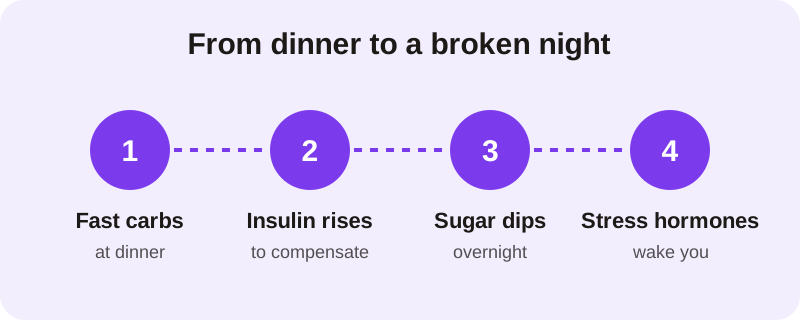
- Fast carbs at dinner
- Insulin rises to compensate
- Sugar dips overnight
- Stress hormones wake you
Androgens add a second mechanism. Higher androgens are linked with changes to airway muscle and tissue that can make breathing less steady during sleep, raising the chance of snoring or short pauses in breathing — a pattern often called sleep apnea. This sits alongside insulin resistance, not apart from it: both are named as features of PCOS by the 2023 international guideline, not separate problems to solve on their own.
Poor sleep is one of the ways this shows up day to day. Alongside fatigue, low mood and headache, it is one of the nine fixed symptoms the PCOS Pal app lets you log, so a bad night can sit next to cravings or a headache in the same record rather than standing alone.
The grogginess, irritability or trouble concentrating that follows a short night are covered in PCOS brain fog and PCOS anxiety, which share the same blood sugar and androgen drivers.
Does insulin resistance affect sleep quality?
Yes. Insulin resistance can make sleep lighter and more broken, because a drop in blood sugar overnight prompts stress hormones that pull you out of deep sleep. Steadying blood sugar through the evening is one direct way to address that strand of it.
Late or large evening meals, and the cravings that follow an inconsistent day of eating, are covered in PCOS late night eating and PCOS sugar cravings. Both describe the same evening blood sugar pattern that can carry into the night and shorten sleep.
What helps improve sleep with PCOS
A few habits address the blood sugar side directly: a dinner built on protein, fibre and a little fat slows the evening glucose rise, and keeping meals at fairly regular times through the day avoids the swings that are hardest on sleep.
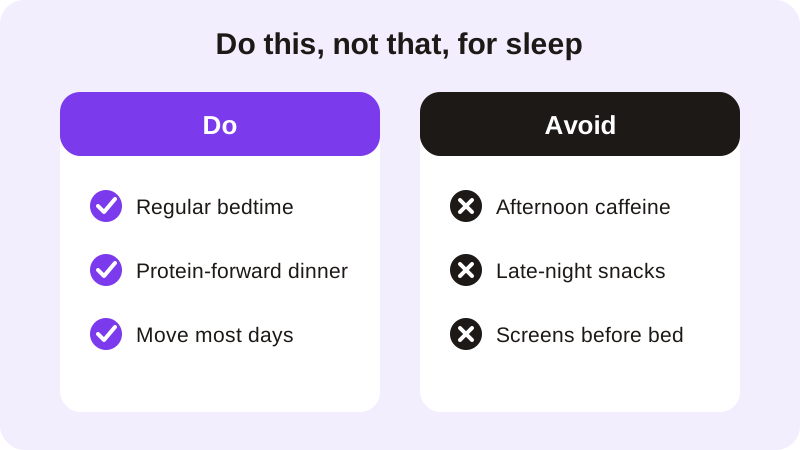
- Do: regular bedtime, protein-forward dinner, move most days.
- Avoid: afternoon caffeine, late-night snacks, screens before bed.
Moderate activity most days supports steadier blood sugar and, with it, steadier sleep. The international guideline's weekly targets — 150 to 300 minutes of moderate activity, or 75 to 150 minutes of vigorous activity, plus muscle strengthening on two non-consecutive days — apply here too, and no exercise type is shown to work better than another, so the one you will actually keep up counts most. How much exercise for PCOS per week breaks that down further.
Caffeine and alcohol both affect sleep more than they are usually given credit for. PCOS and coffee covers how caffeine timing changes blood sugar and sleep; PCOS and alcohol covers why a nightcap can shorten and lighten sleep even when it feels like it helps you drop off.
Spreading fluid through the day, rather than drinking a large amount right before bed, avoids trading one disrupted night for another. How much water with PCOS covers the daily range in more detail.
When trouble sleeping needs a doctor's visit
Some signs point beyond a habit fix. Loud snoring, gasping or pauses in breathing noticed by a partner, daytime exhaustion despite enough time in bed, or sleep trouble that does not shift after a few weeks of steadier eating and regular movement are all reasons to talk to a doctor or dietitian who knows your history.
A doctor can assess for sleep apnea properly, review whether any medicine you take affects sleep, and look at whether poor sleep is tangled up with low mood or anxiety that needs its own support — covered in PCOS anxiety. Bringing a short record of your nights, alongside cravings, mood and energy, makes that conversation easier to have.
Sources
Frequently asked questions
Does PCOS cause insomnia?
PCOS does not cause insomnia on its own, but insulin resistance and androgens linked to PCOS can make sleep lighter and more fragmented, and anxiety or low mood can keep the mind active at night. If trouble falling or staying asleep continues most nights, talk to a doctor about what is driving it.
Can poor sleep make PCOS symptoms worse?
Poor sleep and PCOS can feed each other: short or broken sleep raises stress hormones that make insulin resistance harder to manage, which can then affect sleep quality again the next night. Keeping an eye on sleep alongside cravings, fatigue and mood can show whether they tend to cluster together.
Is PCOS linked to sleep apnea?
Sleep apnea — pauses or shallow breathing during sleep, often with loud snoring — is more commonly raised in PCOS discussions because androgens and insulin resistance can affect airway muscles and tissue. If you or a partner notice snoring, gasping or daytime exhaustion despite enough time in bed, raise it with a doctor, who can arrange proper assessment.
Does caffeine timing matter for PCOS sleep?
It can. Caffeine late in the day can delay falling asleep and lighten sleep overall, which matters more when PCOS already tends to disrupt sleep through blood sugar swings. Shifting coffee earlier, or choosing decaf after midday, is a simple change worth trying; see what works for your own routine.
This article is for education. It is not medical advice, diagnosis or treatment — talk to a clinician about your own care.
More in this series
- Anti-inflammatory eating for PCOS: what is real — Where "anti-inflammatory" and PCOS actually meet, which foods the evidence supports, which only marketing does, and how it overlaps with insulin advice.
- Foods to limit with PCOS, and why banning them backfires — The foods worth eating less often with PCOS, the evidence for each, and why "limit" beats "never" for a diet you can keep.
- Insulin resistance and PCOS, explained — What insulin resistance is, why it is so common in PCOS, how it is actually tested, and what food, movement, sleep and medication each do about it.
- Low-GI foods for PCOS: a practical list — What the glycaemic index does and does not tell you, which carbohydrates rank low, how protein and fat change the picture, and where GI stops helping.
- PCOS breakfast ideas that hold you until lunch — Why breakfast is where PCOS eating plans break, the protein-fibre-fat template that fixes it, ten breakfasts that use it, and what to do about coffee.
- PCOS diet: what to eat, and why it works — What the evidence says about eating with PCOS: insulin, the pattern that helps, the foods worth limiting, and why no rigid plan is required.
- PCOS is now PMOS: what changed and what didn't — PCOS has a new name, polyendocrine metabolic ovarian syndrome. Why it changed, and why your diagnosis and treatment stay the same.
- A 7-day PCOS meal plan you can actually keep — Seven days of ordinary meals built on the pattern the evidence supports, with a shopping list and swaps, and no food group cut out.