Coffee itself isn't a problem for PCOS — what goes into the cup and around it is where the real effect on insulin and blood sugar shows up.
Coffee itself is not a problem with PCOS — there is no PCOS-specific reason to avoid it. What matters more is what goes into the cup, and whether coffee is standing in for a meal that would otherwise keep your blood sugar steady.
This sits alongside the PCOS diet guide, which explains why insulin is the lever worth paying attention to in PCOS. Coffee is a small piece of that picture, not a separate rule of its own.
Does coffee affect insulin resistance in PCOS?
PCOS involves insulin resistance for many people, and the 2023 international guideline names insulin resistance as a factor in the condition, alongside a raised risk of type 2 diabetes. When blood sugar rises, insulin rises to bring it down; higher insulin is linked with higher androgens, which is part of why insulin is the lever discussed throughout this site. You can read the full mechanism in insulin resistance and PCOS.
Plain black coffee, or coffee with a splash of milk, does not contain meaningful carbohydrate. It is not the coffee itself that pushes glucose or insulin up. Where coffee becomes relevant is in what typically accompanies it: sugar stirred in, flavoured syrups, sweetened creamers, or a pastry alongside it. Those are carbohydrate and free sugar sources like any other, and the same reasoning that applies to foods to limit with PCOS applies here — not a ban, but worth noticing.
What actually goes in the cup matters
The NHS sets out clear thresholds for sugar in food: over 22.5 g of sugars per 100 g counts as high in sugar, and 5 g or less per 100 g counts as low. A bottled or coffee-shop drink loaded with syrup can sit well into that high-sugar territory, even though it looks and is ordered like a coffee. A large flavoured latte is closer to a sweet drink with coffee flavouring than to a cup of coffee with milk.
This is not about never having a sweetened coffee. It is about recognising which drinks are essentially dessert and which are plain coffee, so the choice is made on purpose rather than by default. Some practical distinctions:
- Black coffee — negligible carbohydrate, negligible effect on blood sugar.
- Coffee with plain milk — a small amount of protein from the milk, still low in sugar.
- Coffee with sugar or syrup — added free sugars, same category as any other sweetened drink.
- Flavoured coffee-shop drinks with syrup, whipped cream or sweetened milk alternatives — can carry a substantial amount of sugar in one cup.
If you enjoy a sweeter coffee, that is a choice like any other food choice — it is one drink, not a diet failure. The Eatwell Guide's approach of balance rather than elimination applies here as much as anywhere else.
Can coffee replace breakfast?
This is where coffee causes more trouble than the coffee itself deserves. If a coffee is doing the job of breakfast — nothing eaten until much later, then a bigger or less structured meal when hunger catches up — the problem is the missing meal, not the drink. A breakfast built on protein, fibre and a little fat gives your blood sugar something steadier to work with through the morning than caffeine alone.
If mornings are genuinely not a time you want food, that is fine — eating tailored to you is exactly what the 2023 international guideline recommends, since it finds no single diet composition that works better than another for PCOS. A small protein-containing snack whenever you are ready to eat, alongside your coffee, does more for steady blood sugar than the coffee replacing food altogether. PCOS snacks has ideas that travel well if breakfast happens at your desk rather than at the table.
Does coffee make PCOS sugar cravings worse or better?
There is no PCOS-specific evidence pointing either way on this, and it is worth being honest about that gap rather than inventing a rule. What is well established is that swings in blood sugar — a fast rise followed by a fast drop — are linked with cravings, and that pattern is covered in PCOS sugar cravings. A syrupy, sugar-heavy coffee drunk on an empty stomach follows exactly that fast-rise, fast-drop pattern, which is one reason it can leave you looking for something sweet an hour later. Plain coffee does not carry the same carbohydrate load, so it is not doing the same thing to your blood sugar either way.
If you notice caffeine itself affects your sleep or your anxiety, that is worth adjusting for your own comfort, but it is a general wellbeing consideration rather than something specific to PCOS.
Where coffee fits with a low-GI approach
Coffee does not have a glycaemic index in the way that a carbohydrate food does, so it sits outside the low, medium and high GI bands Diabetes UK sets out (55 or below is low, 56 to 69 is medium, 70 or more is high). What it can do is accompany a low-GI breakfast or snack without disrupting it — coffee with milk alongside porridge or yoghurt does not change the GI of the meal. For more on how that ranking works and which foods sit where, see low-GI foods for PCOS.
If you are already tracking meals for their carbohydrate and protein content, the same logic applies to what you pour into your coffee. A splash of milk is a rounding error. A flavoured syrup is a carbohydrate addition worth counting, in the same way a spoonful of sugar in tea would be.
A simple way to think about it
Coffee, plain or with milk, fits into ordinary eating without needing special treatment. What is worth paying attention to is the sugar and syrup that sometimes travel with it, and whether coffee is quietly replacing meals rather than sitting alongside them. Neither is a PCOS-specific rule — both are the same principles that apply to any food or drink, applied to your cup.
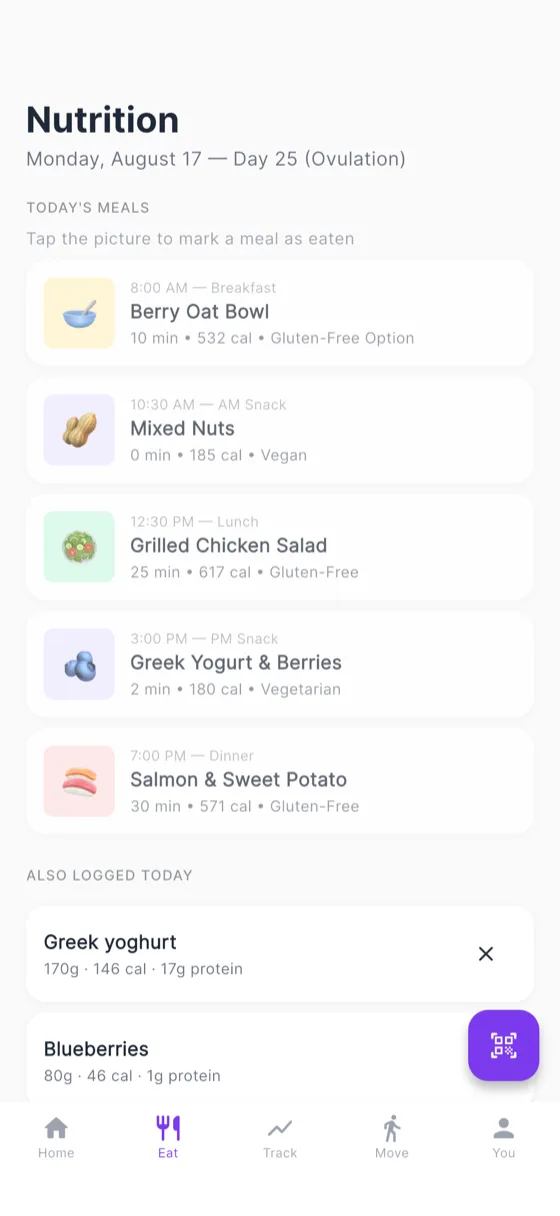
In the app: the barcode scanner in PCOS Pal can score a bottled coffee drink the same way it scores any packaged food, which is a quick way to see how much sugar a flavoured one is actually carrying.
If you are trying to conceive or are pregnant, caffeine limits are a real and separate area of guidance that this article does not cover — ask a doctor or midwife what applies to you.
Frequently asked questions
Does coffee raise insulin in PCOS?
There's no PCOS-specific rule against coffee, and the sources this site relies on don't single out caffeine as a concern. What affects insulin more predictably is sugar and syrup added to the drink, and whether it replaces a proper meal. Ask a clinician if you have specific concerns about your own caffeine intake.
Is decaf better than regular coffee for PCOS?
There's no PCOS guideline recommending decaf over regular. If caffeine affects your sleep, energy or anxiety, switching may help you personally, but that's a general wellbeing choice, not a PCOS-specific one. The bigger factor for insulin is what's added to the cup.
Can I drink coffee on an empty stomach with PCOS?
This isn't specifically addressed in PCOS guidance. Some people find black coffee on an empty stomach unsettles them, others don't notice anything. If you're using coffee to skip breakfast entirely, the missing meal — not the coffee — is the more relevant issue for steady blood sugar.
What should I add to coffee if I have PCOS?
Plain milk adds a little protein and keeps the drink low in sugar. Sugar, syrups and sweetened creamers add free sugars with little else, the same category the NHS asks people to cut down on generally. Unsweetened milk or a splash of cream keeps a coffee closer to a plain drink than a dessert.
Should I ask a doctor about caffeine if I'm trying to conceive?
Yes. Caffeine limits in pregnancy and while trying to conceive are a real area of guidance, but it sits outside what this article covers. A doctor, midwife or dietitian who knows your history is the right person to ask.
Put this into practice with PCOS Pal. The free app scores every food by its protein, carbohydrate and glycaemic index, rotates a seven-day set of meals, and tracks a cycle that is not 28 days.
This article is for education. It is not medical advice, diagnosis or treatment — talk to a clinician about your own care.
More in this series
- Anti-inflammatory eating for PCOS: what is real — Where "anti-inflammatory" and PCOS actually meet, which foods the evidence supports, which only marketing does, and how it overlaps with insulin advice.
- Foods to limit with PCOS, and why banning them backfires — The foods worth eating less often with PCOS, the evidence for each, and why "limit" beats "never" for a diet you can keep.
- Insulin resistance and PCOS, explained — What insulin resistance is, why it is so common in PCOS, how it is actually tested, and what food, movement, sleep and medication each do about it.
- Low-GI foods for PCOS: a practical list — What the glycaemic index does and does not tell you, which carbohydrates rank low, how protein and fat change the picture, and where GI stops helping.
- PCOS breakfast ideas that hold you until lunch — Why breakfast is where PCOS eating plans break, the protein-fibre-fat template that fixes it, ten breakfasts that use it, and what to do about coffee.
- PCOS diet: what to eat, and why it works — What the evidence says about eating with PCOS: insulin, the pattern that helps, the foods worth limiting, and why no rigid plan is required.
- A 7-day PCOS meal plan you can actually keep — Seven days of ordinary meals built on the pattern the evidence supports, with a shopping list and swaps, and no food group cut out.