There is no PCOS-specific water target, so this article explains general fluid guidance, why hydration affects cravings and energy, and how to build a realistic daily habit.
PCOS hydration, how much water you actually need, is not a question with a PCOS-specific number — no guideline sets a higher fluid target for PCOS than for anyone else. What matters more is building a steady habit, because dehydration is easy to mistake for hunger, and sugary drinks are an easy place for insulin resistance to creep in unnoticed.
This sits alongside the PCOS diet guide, which covers the food side of the same insulin lever. Hydration is a smaller piece, but it is one people often get wrong in ways that are easy to fix.
Does PCOS actually change how much water you need?
Not according to the evidence this site works from. The 2023 international guideline, which covers diagnosis and management of PCOS in detail, does not set a hydration target. Roughly 1 in 10 women of reproductive age have PCOS — estimates put it between 10 and 13% of women worldwide — and none of the major bodies behind that figure, including the NHS, Diabetes UK or ACOG, treat fluid intake as a distinct PCOS issue.
That means the starting point is the same general advice given to any adult: drink enough that you are rarely thirsty and your urine runs pale yellow, adjusting upward for heat, exercise, and larger body size. There is no special number to hit, and no benefit to forcing down more than that "just in case" it helps a hormone or a symptom. It does not.
Where hydration does connect to PCOS is indirectly — through appetite, energy and the drinks that often replace water.
Why does hydration affect cravings and energy?
The mechanism worth knowing is the same one that runs through the rest of PCOS eating advice: food and drink affect glucose, glucose drives insulin, and insulin is linked to androgens and to the higher long-term risk of type 2 diabetes that comes with insulin resistance. Plain water does not touch that chain either way. But two things around hydration do matter.
First, thirst and hunger signals overlap, and mild dehydration is commonly mistaken for a craving. If you are reaching for something sweet an hour after lunch, a glass of water before the snack is a reasonable first move — not because it fixes insulin resistance, but because it rules out the simplest explanation. This is worth pairing with the ideas in PCOS sugar cravings, which covers the blood sugar side of the same pattern.
Second, what people drink instead of water is often the real issue. Sugar-sweetened drinks are a source of what the NHS calls free sugars, the same category as cakes and pastries. A can of regular soda or a large juice can carry more sugar than people expect, all absorbed fast with nothing to slow it — closer to a high-GI food than a low one on Diabetes UK's scale, where 70 or more counts as high. Swapping some of those drinks for water, or for tea and coffee — which the NHS counts toward daily fluids — is a simple, low-effort change that does more than any water-tracking number.
What actually counts toward hydration?
More than plain water. The NHS includes tea, coffee, milk, and sugar-free drinks as contributing to fluid intake, alongside water itself. Food counts too — soups, fruit, and vegetables all carry water. If you are already eating at least five portions of fruit and veg a day, as the Eatwell Guide recommends, you are getting a meaningful amount of fluid from food before you have taken a sip of anything.
This is useful to know because it takes the pressure off treating water as a separate task bolted onto the day. A cup of coffee in the morning, herbal tea in the afternoon, a bowl of soup at lunch, and a couple of glasses of water alongside meals add up faster than people assume. For more on coffee specifically — whether caffeine itself affects insulin or symptoms — see PCOS and coffee.
A practical way to check you're roughly on track, without any number to hit: pale yellow urine, rarely feeling thirsty, and steady energy rather than the afternoon crash that sometimes gets blamed on food when it's partly fluid.
How does hydration fit around meals and snacks?
The same template that works for food works here: build the habit into moments you already have, rather than adding a new one. A glass of water with each meal and each snack is an easy anchor — it does not need tracking, and it naturally spreads fluid across the day rather than leaving you to catch up in the evening.
A few practical anchors:
- On waking — a glass of water before coffee, simply because it is the longest gap since your last drink.
- With meals — water alongside breakfast, lunch and dinner rather than only reaching for it when thirsty.
- Around snacks — if you notice a craving between meals, water first, snack second. The PCOS snacks guide has options built on protein, fibre and a little fat if the craving is still there afterwards.
- Around exercise — more before and after activity, especially anything from the cycle-synced workouts in the PCOS Pal app, which adjust intensity to where you are in your cycle.
- In the evening — if late-night eating is more of an issue than daytime hydration, that is worth reading about separately in PCOS late night eating.
None of this requires counting glasses. It requires water being an easy default rather than an afterthought.
Does what you drink matter as much as how much?
Largely, yes. A green smoothie loaded with fruit and no protein can carry as much sugar as a soft drink, even though it feels virtuous — worth checking against the ideas in PCOS smoothie recipes, which builds smoothies around protein and fibre rather than fruit alone. And alcohol counts as fluid but behaves very differently in the body; if that's a regular part of your week, PCOS and alcohol covers what it actually does to blood sugar and insulin.
The label check is the same one used for food: the NHS threshold for a drink or food being high in sugar is over 22.5 grams of sugars per 100 grams, and 5 grams or less counts as low. A quick look at a bottle's nutrition panel tells you more than the marketing on the front.
Persistent excessive thirst, needing to urinate far more than usual, or a dry mouth that doesn't resolve with normal drinking are not things to self-diagnose against a PCOS symptom list — they're worth a conversation with a doctor, since they can point to things unrelated to PCOS entirely.
Frequently asked questions
Does PCOS increase your water needs?
There's no evidence PCOS itself raises fluid needs. The 2023 international guideline doesn't set a hydration target for PCOS, so general fluid guidance for adults applies, adjusted for activity, heat and body size like anyone else.
Can drinking more water help with insulin resistance?
Water itself doesn't lower insulin resistance. What it can do is replace sugary drinks, which the NHS flags as a source of free sugars, and help you tell thirst apart from hunger, which indirectly supports steadier eating patterns.
Do tea and coffee count towards fluid intake?
Yes. The NHS counts tea and coffee among drinks that contribute to daily fluids. What matters more is what's added — syrups and sugar turn a coffee into a sweet drink, which is a separate issue from caffeine itself.
What are signs you're not drinking enough?
Dark urine, headaches, low energy and dry mouth are common general signs of low fluid intake. These aren't specific to PCOS. If you notice persistent thirst, very frequent urination, or other unusual symptoms, mention them to a doctor.
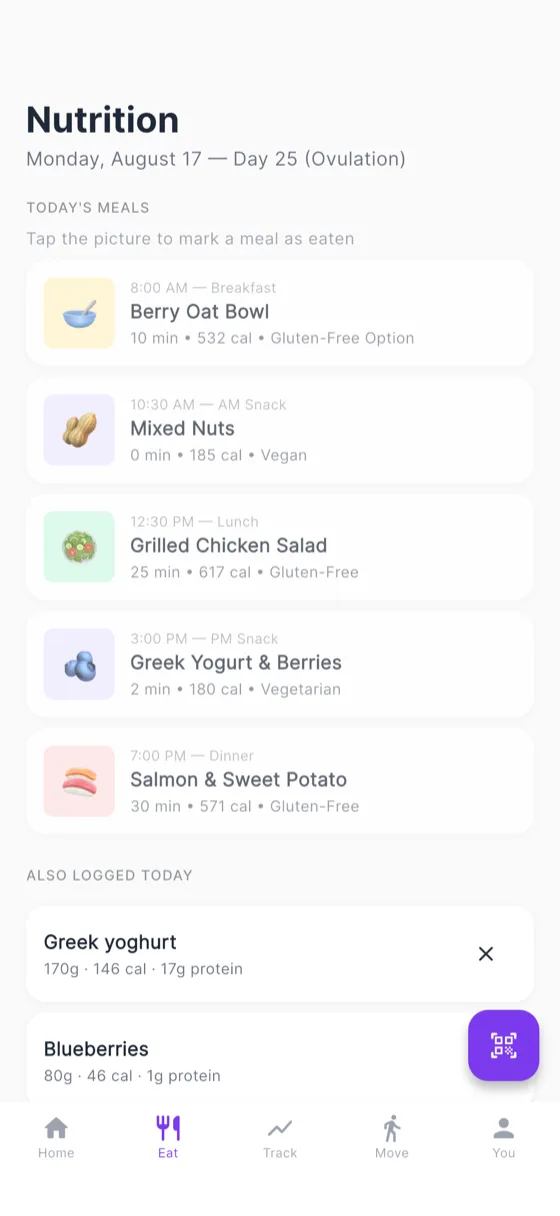
Put this into practice with PCOS Pal. The free app scores every food by its protein, carbohydrate and glycaemic index, rotates a seven-day set of meals, and tracks a cycle that is not 28 days.
This article is for education. It is not medical advice, diagnosis or treatment — talk to a clinician about your own care.
More in this series
- Anti-inflammatory eating for PCOS: what is real — Where "anti-inflammatory" and PCOS actually meet, which foods the evidence supports, which only marketing does, and how it overlaps with insulin advice.
- Foods to limit with PCOS, and why banning them backfires — The foods worth eating less often with PCOS, the evidence for each, and why "limit" beats "never" for a diet you can keep.
- Insulin resistance and PCOS, explained — What insulin resistance is, why it is so common in PCOS, how it is actually tested, and what food, movement, sleep and medication each do about it.
- Low-GI foods for PCOS: a practical list — What the glycaemic index does and does not tell you, which carbohydrates rank low, how protein and fat change the picture, and where GI stops helping.
- PCOS breakfast ideas that hold you until lunch — Why breakfast is where PCOS eating plans break, the protein-fibre-fat template that fixes it, ten breakfasts that use it, and what to do about coffee.
- PCOS diet: what to eat, and why it works — What the evidence says about eating with PCOS: insulin, the pattern that helps, the foods worth limiting, and why no rigid plan is required.
- A 7-day PCOS meal plan you can actually keep — Seven days of ordinary meals built on the pattern the evidence supports, with a shopping list and swaps, and no food group cut out.