PCOS anxiety has a physical thread — blood sugar swings, insulin resistance and androgens — alongside the stress of living with an unpredictable condition, and both sides are worth addressing.
Quick answer
PCOS anxiety is real and common, and part of it is physical: blood sugar swings, insulin resistance and androgens all affect mood. Steadier meals and movement can ease some triggers, but ongoing anxiety needs its own care from a clinician.
Key takeaways
- Blood sugar swings from fast-digesting meals can feel like anxiety — shakiness, a racing heart, sudden irritability.
- Insulin resistance and higher androgens are both linked to mood in PCOS, not just stress or circumstance.
- Meals built on protein, fibre and a little fat smooth some of the physical triggers behind anxious feelings.
- Food and movement are support, not a treatment — persistent anxiety needs assessment from a clinician.
- PCOS is now sometimes called PMOS, but the mental health side of the condition hasn't changed.
PCOS anxiety tends to have a physical thread running through it, not just a stressful diagnosis to manage: blood sugar swings, insulin resistance and androgens all influence mood. That doesn't make it less real, and it doesn't mean willpower is the fix.
PCOS affects roughly 1 in 10 women of reproductive age, and the condition's name is itself under review — see PCOS is now PMOS for what that's about. Anxiety sits alongside the symptoms more often discussed, and it deserves the same practical, evidence-based approach as the food and cycle side covered in the PCOS diet guide.
Why does PCOS make anxiety more likely?
Several things overlap, and most people living with PCOS are dealing with more than one of them at once. Insulin resistance, common in PCOS, means blood sugar can swing more sharply after a meal than it otherwise would; the swing itself produces physical sensations — a racing heart, shakiness, a jittery, keyed-up feeling — that are hard to tell apart from anxiety in the moment. Androgens, which run higher in PCOS, are tied up with mood in ways still being studied. None of this is a character flaw or something to white-knuckle through.
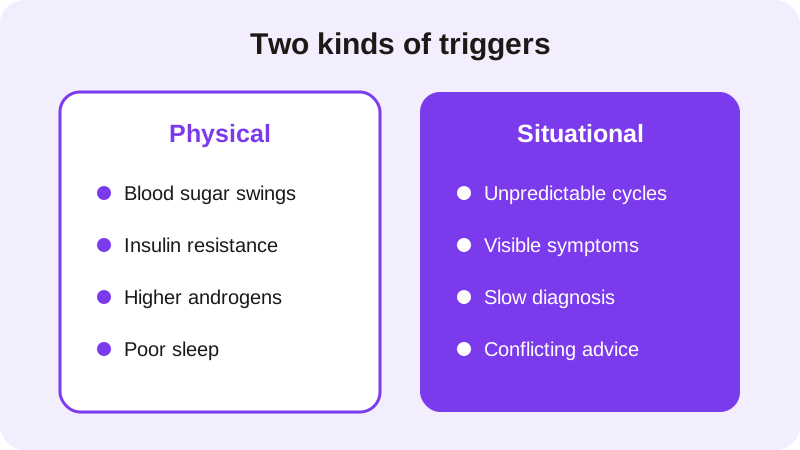
The situational side is just as real. Cycles that don't arrive on a predictable schedule make it hard to plan around them, which keeps a low hum of uncertainty running in the background. Symptoms that are visible to other people — acne, hair growth, changes in weight — can carry a social weight that has nothing to do with blood sugar. And the diagnosis itself often takes longer to reach than it should, with appointments, tests and conflicting advice along the way, which is its own source of stress before any treatment has even started.
None of this means anxiety in PCOS is only physical, or only situational. It's usually both at once, which is why no single fix — a supplement, a diet, a breathing app — is likely to resolve it on its own. A layered approach, addressing the physical triggers where you can and getting direct support for the anxiety itself, tends to work better than either alone.
Can blood sugar swings cause anxious feelings?
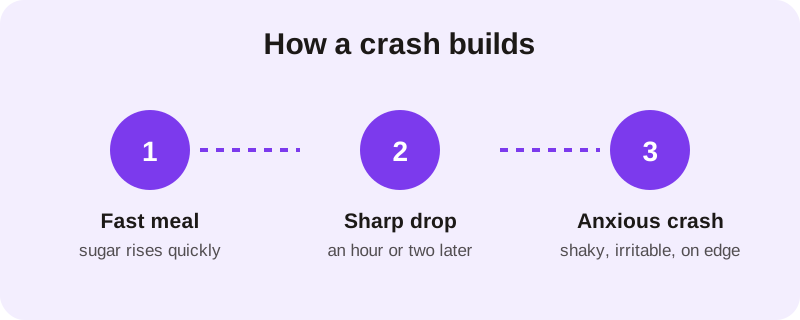
Yes, and this is one of the more useful things to know if your anxiety seems to spike at particular times of day rather than sitting there constantly. A meal that's mostly fast carbohydrate — white toast on its own, a sugary pastry, a large glass of juice — pushes blood sugar up quickly and brings it down just as fast. That drop can feel like shakiness, a sudden urge to eat, irritability or a wave of anxious energy, usually an hour or two after eating. It's a real physiological event, not a mood swing you've invented.
The fix isn't to avoid carbohydrate. It's to slow it down. A meal built on protein, fibre and a little fat brings sugar up and down more gradually, which means fewer sharp drops to ride out. The mechanism is covered in insulin resistance and PCOS, and the practical food list is in low-GI foods for PCOS. If the crashes and cravings cluster at a particular time of day, PCOS sugar cravings covers why, and PCOS snacks has options for bridging the gap between meals.
What helps with PCOS anxiety day to day?
Steadier meals are one lever. Regular movement is another — it works on insulin resistance directly, and a workout matched to where you are in your cycle, the idea behind how much exercise for PCOS per week, tends to be more sustainable than pushing hard on days your body is already under strain. Sleep and hydration matter too, and both are easy to let slide when you're anxious rather than the other way round — PCOS hydration has the practical version of that.
None of these are a treatment for anxiety on their own. They reduce some of the physical noise that can tip into anxious feelings, which makes whatever anxiety remains easier to deal with directly — but they're support, not a substitute.
When should I talk to a doctor about anxiety and PCOS?
If anxiety is showing up often, lasting, or making ordinary things — work, sleep, being around people — harder than they used to be, it's worth raising with a doctor, whether or not you connect it to PCOS yourself. A clinician can assess it properly, consider what else might be contributing, and talk through options, including talking therapies. Mentioning your PCOS history is useful context, not a diagnosis you're handing them — it helps them see the fuller picture rather than treating the anxiety in isolation.
The PCOS Pal app's doctor summary can help in a small, practical way here: it pulls together your cycle and symptom tracking so you're not trying to describe months of pattern from memory in a short appointment. It doesn't replace the conversation — it just makes the conversation easier to have.
Anxiety that comes with PCOS is still anxiety, and it still deserves direct, proper treatment. The food and movement side can make the physical background quieter. The rest is a conversation worth having with someone qualified to help.
Sources
Frequently asked questions
Does PCOS cause anxiety?
Not in a simple cause-and-effect way, but several things in PCOS make anxiety more likely: insulin resistance and the blood sugar swings that go with it, higher androgens, unpredictable cycles, and the daily work of managing symptoms. It's a mix of physical and situational factors, not something you're imagining or failing to control.
Can blood sugar swings feel like anxiety?
Yes. A sharp rise and fall in blood sugar after a fast-digesting meal can produce a racing heart, shakiness and a sense of dread that is hard to tell apart from anxiety. Meals with protein, fibre and a little fat slow that swing down, though they won't resolve anxiety that has other causes.
What helps PCOS anxiety day to day?
Steadier meals, regular movement, sleep and hydration reduce some of the physical triggers that can tip into anxious feelings. None of these replace treatment for anxiety itself — talking therapies, and anything a clinician judges appropriate, are the direct treatment; food and movement work alongside that.
Is PCOS anxiety different from other anxiety?
The anxious feeling itself isn't different, but some triggers can be specific to PCOS — blood sugar swings, cycle unpredictability, androgen-related symptoms. It's worth mentioning your PCOS when you talk to a clinician about anxiety so they can see the fuller picture rather than treating it in isolation.
Should I see a doctor about PCOS and anxiety?
Yes, if anxiety is frequent, intense, or getting in the way of daily life. A doctor can assess it properly, consider other contributing factors, and discuss options including talking therapies. A clinician who knows your PCOS history is well placed to see how the two might connect.
This article is for education. It is not medical advice, diagnosis or treatment — talk to a clinician about your own care.
More in this series
- Anti-inflammatory eating for PCOS: what is real — Where "anti-inflammatory" and PCOS actually meet, which foods the evidence supports, which only marketing does, and how it overlaps with insulin advice.
- Foods to limit with PCOS, and why banning them backfires — The foods worth eating less often with PCOS, the evidence for each, and why "limit" beats "never" for a diet you can keep.
- Insulin resistance and PCOS, explained — What insulin resistance is, why it is so common in PCOS, how it is actually tested, and what food, movement, sleep and medication each do about it.
- Low-GI foods for PCOS: a practical list — What the glycaemic index does and does not tell you, which carbohydrates rank low, how protein and fat change the picture, and where GI stops helping.
- PCOS breakfast ideas that hold you until lunch — Why breakfast is where PCOS eating plans break, the protein-fibre-fat template that fixes it, ten breakfasts that use it, and what to do about coffee.
- PCOS diet: what to eat, and why it works — What the evidence says about eating with PCOS: insulin, the pattern that helps, the foods worth limiting, and why no rigid plan is required.
- PCOS is now PMOS: what changed and what didn't — PCOS has a new name, polyendocrine metabolic ovarian syndrome. Why it changed, and why your diagnosis and treatment stay the same.
- A 7-day PCOS meal plan you can actually keep — Seven days of ordinary meals built on the pattern the evidence supports, with a shopping list and swaps, and no food group cut out.