Walking and HIIT both improve insulin sensitivity in PCOS through different mechanisms, so the practical answer is to use walking most days and add HIIT when energy allows, timed around the cycle rather than forced every day.
Quick answer
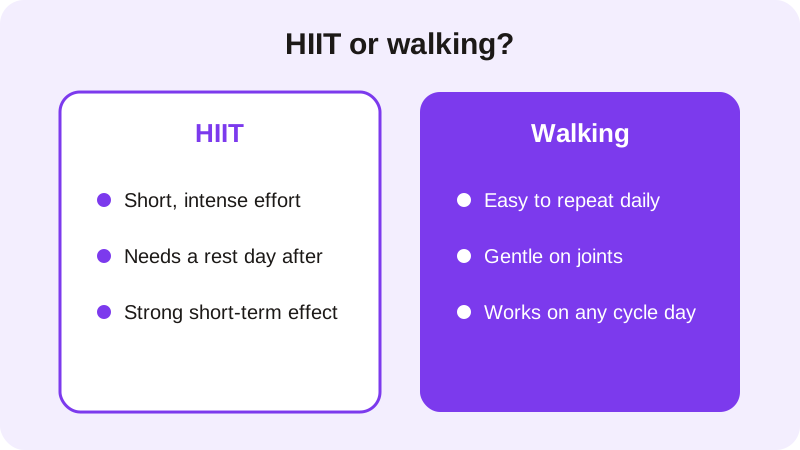
When comparing PCOS HIIT or walking, neither wins alone: walking supports insulin sensitivity every day, while HIIT adds a stronger, shorter dose of the same effect. Most weeks benefit from using both.
Key takeaways
- Walking and HIIT both lower insulin resistance, just on different timelines
- Walking can be done daily with no recovery day needed
- HIIT needs rest afterward and suits higher-energy days
- The 2023 international guideline does not favour one exercise type over another
- Combining both across a week beats picking just one forever
PCOS HIIT or walking debates usually miss the point: both can lower insulin resistance, just on different timelines and at different costs to your recovery. The better question is which one fits today, and whether your week needs both.
Is HIIT or walking better for PCOS?
The 2023 international guideline does not name a single best workout for PCOS. It asks for regular physical activity, chosen to fit the person, aimed at the same target diet changes are aimed at: steadier insulin, since insulin resistance sits behind the raised androgens that show up as irregular cycles, acne or extra hair growth. The mechanism is explained fully in insulin resistance and PCOS.
What the NHS and ACOG agree on is simpler than either camp of exercise advice suggests: being regularly active matters more than which activity you choose. Neither source singles out HIIT or walking as the PCOS exercise. That leaves the choice to how much time, energy and recovery you actually have this week.
| Aspect | HIIT | Walking |
|---|---|---|
| Session length | Short and intense | Longer, steady pace |
| Recovery needed | A rest or easy day after | None required |
| Impact on joints | Higher | Low |
| Insulin effect | Sharp, short-lived boost | Steady, repeatable |
| Easiest to do | On higher-energy days | Any day, any mood |
What does HIIT actually do for insulin resistance?
HIIT, short for high-intensity interval training, alternates brief bursts of hard effort with recovery. The hard bursts pull glucose into working muscle quickly, and that effect on insulin sensitivity can carry on for some time after the session ends. For someone with limited time, that makes HIIT for PCOS insulin resistance an efficient option: a short session can do real work.
HIIT also asks more of joints, heart rate and coordination than walking does, so it is not automatically the right choice on a day when energy is already low, sleep was poor, or a period has just started. It tends to suit days when you feel capable of pushing, not days you are forcing yourself through.
Why does walking still count as real exercise for PCOS?
Walking is often dismissed as not doing enough, but the improvement in insulin sensitivity does not require intensity — it requires repetition. A walk after a meal, in particular, puts working muscle to use right when blood sugar is rising, which is one reason walking for PCOS shows up so often in practical advice despite looking unglamorous.
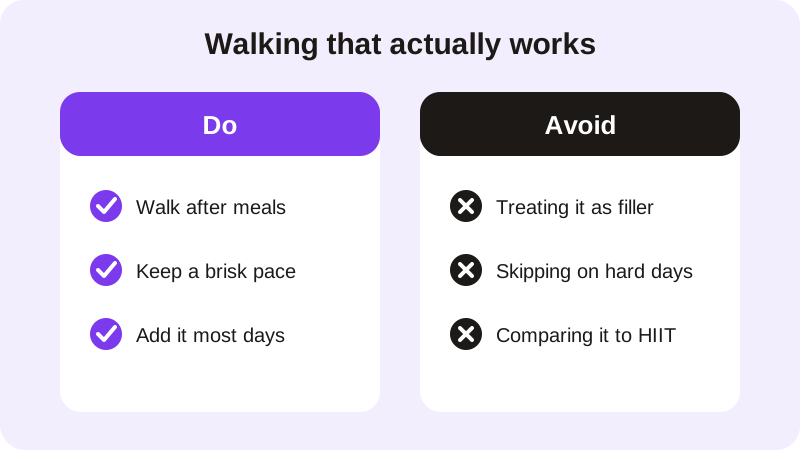
Walking also carries almost none of the recovery cost HIIT does, which matters for the days when PCOS symptoms themselves — fatigue, period pain, poor sleep — make anything harder feel like too much. It is the one option that stays available on nearly every day of the month.
Can you do both in the same week?
Yes, and for most people that is the practical answer rather than picking a side. Walking can sit underneath everything else, done most days regardless of energy, while HIIT gets added on the days that can take it. A week built this way gets the steady, repeatable benefit of walking and the sharper benefit of HIIT without asking either one to carry the whole plan alone.
How to split the week, how many hard sessions to include, and where strength training fits are covered in detail in how much exercise for PCOS per week, which lays out a fuller weekly structure than this page can on its own. The short version: walking is the floor, HIIT is the ceiling you reach for on the days that allow it, and rest is still part of the plan.
How does this fit with your cycle?
Energy and tolerance for intensity are not flat across a cycle. Many people can push harder in the days leading up to ovulation and find the same HIIT session feels much tougher in the days before or during a period. Walking tends to feel doable on more of those days, which is partly why it works as the steady baseline and HIIT works as the thing layered on top when conditions suit it.
This is the idea behind cycle-synced workouts: matching the type and intensity of a session to where someone actually is in their cycle, rather than running the identical plan every week regardless. The PCOS Pal app's cycle-synced workouts are built around exactly this — tracking the cycle alongside symptoms and suggesting sessions that fit the phase, instead of leaving it to guesswork.
None of this needs to be complicated. Walk most days because it is sustainable and asks almost nothing of recovery. Add HIIT when energy and time allow, and treat the cycle as information about which days are which, not a reason to force a hard session through. The same pattern of working with the body rather than against it runs through the PCOS diet guide: no single food or workout is the answer, consistency is.
Sources
Frequently asked questions
Does HIIT work better than walking for PCOS?
Neither is officially better. HIIT produces a stronger, shorter-lived improvement in insulin sensitivity per session, while walking produces a steadier, repeatable effect because it is easier to do daily. The 2023 international guideline does not recommend one exercise type over another for PCOS.
Can walking alone help with insulin resistance in PCOS?
Yes. Regular walking, especially after meals, still improves how the body uses insulin, and it carries low injury risk, so it is easier to keep up for years. It does not need to be paired with HIIT to count as real exercise.
How often should someone with PCOS do HIIT?
There is no fixed number that fits everyone. A common pattern is a couple of HIIT sessions a week with walking or rest on the other days, giving the body recovery time in between. A clinician or trainer who knows your history can tailor this further.
Is HIIT safe for everyone with PCOS?
Not automatically. PCOS itself does not rule HIIT out, but other conditions, fitness level, and symptoms like chest pain or dizziness during exercise change the picture. Anyone starting intense training after being inactive should check in with a doctor first.
What's the easiest way to start if I'm new to exercise with PCOS?
Start with walking. It needs no equipment, no recovery day, and fits around a cycle without much planning. Once walking is a steady habit, adding one or two short HIIT sessions a week is a smaller jump than starting with HIIT alone.
This article is for education. It is not medical advice, diagnosis or treatment — talk to a clinician about your own care.
More in this series
- Anti-inflammatory eating for PCOS: what is real — Where "anti-inflammatory" and PCOS actually meet, which foods the evidence supports, which only marketing does, and how it overlaps with insulin advice.
- Foods to limit with PCOS, and why banning them backfires — The foods worth eating less often with PCOS, the evidence for each, and why "limit" beats "never" for a diet you can keep.
- Insulin resistance and PCOS, explained — What insulin resistance is, why it is so common in PCOS, how it is actually tested, and what food, movement, sleep and medication each do about it.
- Low-GI foods for PCOS: a practical list — What the glycaemic index does and does not tell you, which carbohydrates rank low, how protein and fat change the picture, and where GI stops helping.
- PCOS breakfast ideas that hold you until lunch — Why breakfast is where PCOS eating plans break, the protein-fibre-fat template that fixes it, ten breakfasts that use it, and what to do about coffee.
- PCOS diet: what to eat, and why it works — What the evidence says about eating with PCOS: insulin, the pattern that helps, the foods worth limiting, and why no rigid plan is required.
- PCOS is now PMOS: what changed and what didn't — PCOS has a new name, polyendocrine metabolic ovarian syndrome. Why it changed, and why your diagnosis and treatment stay the same.
- A 7-day PCOS meal plan you can actually keep — Seven days of ordinary meals built on the pattern the evidence supports, with a shopping list and swaps, and no food group cut out.