PCOS pilates is a low-impact way to build strength and support insulin sensitivity, and works best paced to your cycle rather than forced every day at the same intensity.
Quick answer
PCOS pilates is a low-impact way to build core strength and support insulin sensitivity through movement. It won't change hormone levels on its own, but paced to your cycle it's a habit most people can actually keep.
Key takeaways
- Pilates is one form of movement that helps insulin sensitivity, not a treatment for PCOS on its own
- Match intensity to your cycle: gentler around a period, more during the first half
- A beginner session needs no equipment beyond a mat and roughly fifteen minutes of focus
- Pair pilates with some higher-intensity movement rather than relying on it alone
- Stop and check with a clinician if a move causes sharp or ongoing pain
PCOS pilates is worth doing: it builds core and pelvic-floor strength without the joint pounding of running, and regular movement of any kind helps the body respond better to insulin. It won't rebalance hormones on its own, but as a steady habit it holds its own against higher-intensity workouts.
It sits alongside the wider picture in the PCOS diet guide, which explains why insulin resistance is the lever worth focusing on with PCOS, and next to the PCOS yoga for beginners guide, if you're trying to decide between the two.
Does pilates actually help with PCOS?
The 2023 international guideline for PCOS recommends regular physical activity as part of first-line management, alongside healthy eating, without naming one form of exercise as better than another. Pilates fits that brief well: it is structured, repeatable, and scales easily to how much energy you have on a given day.
The mechanism is the same one covered in insulin resistance and PCOS: food raises blood glucose, the body releases insulin to bring it back down, and when cells resist that insulin, the body makes more of it — which can, in turn, push up androgens. Movement is one of the few things that improves how cells respond to insulin without changing anything about food at all. Pilates, being low-impact and repeatable, is an easier one to keep doing on the weeks when energy is low than something that demands more recovery.
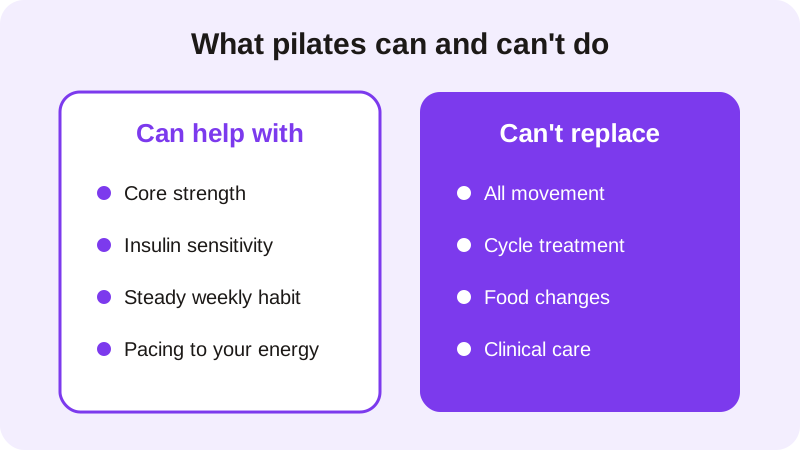
What pilates is not is a fix for PCOS by itself. It is not a weight-loss plan, and it will not, on its own, regulate cycles or clear skin changes linked to androgens. It is exercise, and like any exercise it earns its place through being repeated, not through being pilates specifically.
How should pilates fit around your cycle?
Match the effort to the phase rather than running the same session regardless of how you feel: a steadier pace in the days around a period, building through the days after, and easing back again before the next one starts.
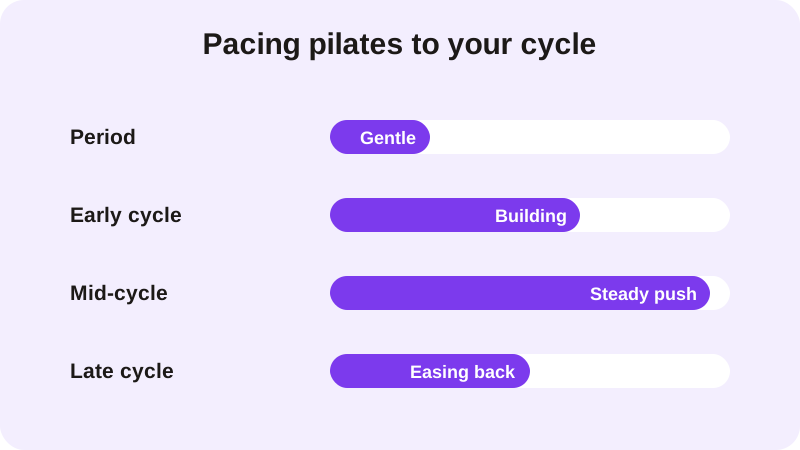
This is the idea behind cycle-synced workouts: matching movement to where you are rather than running an identical session every day regardless of how you feel. It matters more with PCOS, where cycles are often irregular, so "day fourteen" does not mean the same thing most months. The PCOS Pal app tracks cycles and logs symptoms, and its cycle-synced workouts nudge pace up or down accordingly, which is useful when you cannot rely on a calendar to tell you where you are.
What does a beginner PCOS pilates session look like?
You do not need equipment beyond a mat, and a short, repeatable structure works better than an elaborate one you will not keep up. The same five steps work whether you are following a video or building your own routine.
- Warm up with breathing and pelvic tilts — a few slow breaths and gentle rocking to find a neutral spine before anything else.
- Add core basics — pelvic curls, toe taps or a modified hundred, done slowly and without straining the neck.
- Move to standing or side work — leg lifts, side-lying clamshells or standing balance work for the hips and glutes.
- Finish with stretching — spinal twists and hip openers to close the session calmly rather than abruptly.
- Note how you felt — logging energy and any discomfort helps you see patterns across your cycle over time.
A session like this fits into most mornings or evenings without needing a studio, and it is the same low-impact template whether you are three weeks into a routine or returning after a break. If cost or access to a class is the barrier, mat pilates at home covers the same ground as a studio reformer session for a beginner.
Is pilates enough on its own, or do you need more?
Pilates builds strength, control and pelvic-floor function, but the guideline's point is about overall activity, not one format. Combining pilates with some higher-intensity movement — brisk walking, cycling, swimming, or a style of yoga you enjoy — covers more ground than pilates alone, and the mix across a week matters more than any single class done perfectly.
Movement and food work on the same lever. Insulin resistance responds to both regular activity and the pattern of meals across the day — protein, fibre and a little fat at each one, rather than carbohydrate eaten alone — which the PCOS diet guide and the 7-day PCOS meal plan both set out in practical terms. Pilates is the movement half of that picture, not a substitute for the food half.
Pilates for PCOS works best treated as ordinary exercise: useful, repeatable, and one part of a pattern rather than the whole plan.
Sources
Frequently asked questions
Is pilates good for PCOS specifically, or just exercise in general?
Pilates isn't uniquely suited to PCOS — the benefit comes from regular movement, and pilates is one low-impact way to get it. It builds core and pelvic-floor strength without high joint impact, which makes it easier to keep doing consistently than something harder to sustain.
Can pilates lower androgens or fix irregular cycles?
No single exercise does that. Insulin resistance can push up androgens in PCOS, and movement is one way to support how the body responds to insulin, but pilates alone won't resolve irregular cycles or androgen-related symptoms. Those need a clinician's assessment.
How often should I do pilates with PCOS?
There's no PCOS-specific frequency rule. The 2023 international guideline asks for regular physical activity generally rather than naming an exact exercise. A realistic pattern most people can sustain, paced to how you feel across your cycle, matters more than hitting a fixed number of sessions.
Is reformer pilates better than mat pilates for PCOS?
Neither is shown to work better for PCOS specifically. Reformer classes add resistance through a machine; mat pilates uses body weight alone and needs no equipment. Pick whichever you'll actually repeat — consistency is what carries the insulin-sensitivity benefit, not the format.
Should I do pilates during my period?
Many people can, gently. If cramping, fatigue or pain make it uncomfortable, a slower session or rest is a reasonable choice, and matching intensity to the cycle phase — rather than pushing the same pace every day — is the more sustainable approach.
This article is for education. It is not medical advice, diagnosis or treatment — talk to a clinician about your own care.
More in this series
- Anti-inflammatory eating for PCOS: what is real — Where "anti-inflammatory" and PCOS actually meet, which foods the evidence supports, which only marketing does, and how it overlaps with insulin advice.
- Foods to limit with PCOS, and why banning them backfires — The foods worth eating less often with PCOS, the evidence for each, and why "limit" beats "never" for a diet you can keep.
- Insulin resistance and PCOS, explained — What insulin resistance is, why it is so common in PCOS, how it is actually tested, and what food, movement, sleep and medication each do about it.
- Low-GI foods for PCOS: a practical list — What the glycaemic index does and does not tell you, which carbohydrates rank low, how protein and fat change the picture, and where GI stops helping.
- PCOS breakfast ideas that hold you until lunch — Why breakfast is where PCOS eating plans break, the protein-fibre-fat template that fixes it, ten breakfasts that use it, and what to do about coffee.
- PCOS diet: what to eat, and why it works — What the evidence says about eating with PCOS: insulin, the pattern that helps, the foods worth limiting, and why no rigid plan is required.
- PCOS is now PMOS: what changed and what didn't — PCOS has a new name, polyendocrine metabolic ovarian syndrome. Why it changed, and why your diagnosis and treatment stay the same.
- A 7-day PCOS meal plan you can actually keep — Seven days of ordinary meals built on the pattern the evidence supports, with a shopping list and swaps, and no food group cut out.