A practical guide to starting PCOS yoga for beginners, with a simple first routine, what it can and can't do, and when to check with a clinician.
Quick answer
PCOS yoga for beginners means starting gentle: slow, breath-led styles like hatha or restorative yoga, a few times a week, nothing forced. It won't cure PCOS, but it can ease stress and support the same pathways diet and movement work on.
Key takeaways
- Start with gentle, breath-led styles like hatha or restorative, not power or hot yoga.
- Yoga doesn't reverse PCOS, but regular movement supports the same insulin pathway diet does.
- Consistency across weeks matters more than how hard any single session feels.
- Cycle-synced workouts can match gentler poses to harder days of the cycle.
- Stop and ask a clinician if any pose causes sharp pain, dizziness or chest symptoms.
PCOS yoga for beginners works best as slow, breath-led movement — think hatha or restorative yoga rather than a sweaty power class — practised a few times a week with nothing forced. It won't fix PCOS on its own, but it's a realistic way to add movement without adding stress.
Roughly 1 in 10 women of reproductive age have PCOS, and between 10 and 13% of women worldwide are estimated to have it. If you're one of them and every "get more exercise" suggestion has felt like one more thing to fail at, yoga is worth a look precisely because it doesn't ask for intensity.
What does beginner PCOS yoga actually involve?
It looks less like a workout and more like a wind-down. A typical beginner session is mostly floor-based: seated breathing, gentle spinal movement, a handful of held poses, and a few minutes of lying still at the end. Nothing requires flexibility you don't already have.
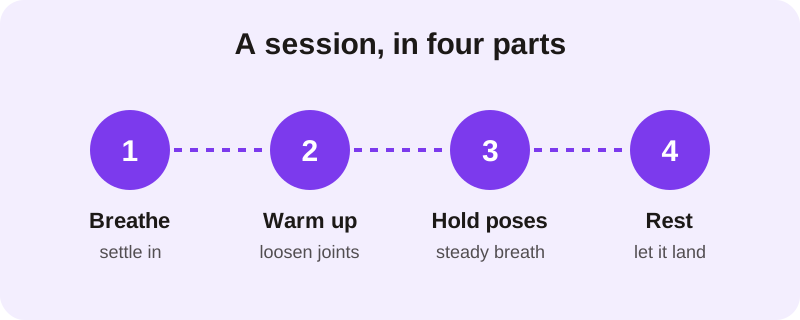
There's no single correct order and no pose you must achieve by a certain week. A beginner class that skips the warm-up or ends without a rest pose is the exception worth avoiding, not the poses themselves.
Can yoga help with insulin resistance and PCOS symptoms?
Here's the honest version: yoga doesn't lower androgens or reverse insulin resistance by itself. What it can do is add regular movement and lower stress, both of which sit on the same side of the ledger as food choices when it comes to managing insulin resistance — the mechanism behind many PCOS symptoms, and a driver of long-term risk for type 2 diabetes.
The 2023 international guideline treats physical activity the same way it treats diet: tailored to the person, with no single type of movement shown to outperform another. That's useful permission. You don't need running or weights to be "doing exercise properly" — consistent gentle movement counts, and it's more sustainable for a lot of people than forcing a style that doesn't fit.
Insulin is the lever worth understanding here, and it's explained properly in insulin resistance and PCOS. Yoga sits alongside the food side of that equation rather than replacing it — the PCOS diet guide covers the eating half of the same picture.
What's a simple beginner routine to try at home?
You don't need a class to start. This sequence needs a mat, comfortable clothes, and roughly fifteen to twenty minutes.
- Sit comfortably and spend a couple of minutes breathing slowly through the nose, letting each exhale be a little longer than the inhale.
- Move through cat-cow on hands and knees a few times, following the breath rather than rushing the movement.
- Hold a low lunge or seated forward fold for several breaths on each side, going only as far as feels comfortable.
- Add a gentle seated twist, one side then the other, keeping the spine long rather than forcing the turn.
- Lie on your back with legs up a wall or a chair for a few minutes, letting the breath slow down further.
- Finish lying flat and still for a short while before getting up — this part matters as much as the poses.
Nothing here needs a studio. A quiet corner of a room is enough, and the same six steps work whether you do them once a week or most days.
How often should you practise, and does it matter where you are in your cycle?
Consistency across weeks tends to matter more than how demanding any one session is. A short routine done most days beats an ambitious class attended once and then abandoned. The NHS encourages regular movement generally, and yoga is one way to meet that without needing equipment or a gym membership.
Energy and comfort also shift across the cycle, which is where matching the type of movement to the day can help rather than treating every day the same. Cycle-synced workouts in the PCOS Pal app suggest gentler sessions on harder days and leave room for more on others — a small bit of structure rather than a strict plan.
If cycles are very irregular, that pattern-matching is less obvious to do by feel alone, which is part of why tracking is useful in the first place.
What should a beginner watch out for?
Most mistakes come from treating a beginner class like a finish line rather than a starting point — pushing a stretch further because someone nearby can, or choosing a hot or fast-paced class because it looks more like "real" exercise.
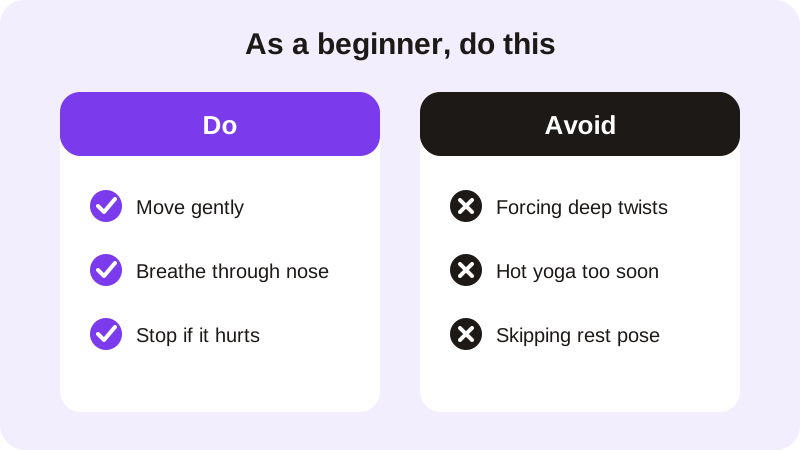
A low-pressure class that ends with a proper rest pose, taught by someone used to beginners, is a better first stop than an advanced studio class picked because it had the earliest start time.
Where does yoga fit alongside everything else?
Yoga is one piece, not the whole plan. It doesn't replace the food side of managing insulin resistance, which is covered in the PCOS diet guide, and it isn't a substitute for a clinician's input if symptoms are significant or if you're trying to work out what's driving them. What it does well is give you a low-barrier way to move regularly, calm the nervous system a little, and build a habit that doesn't depend on motivation showing up every day.
Start small: one short session this week, on a day you actually have fifteen quiet minutes, rather than a plan for every day starting tomorrow. The routine above is enough to begin with, and there's no version of this that needs to be perfect to be worth doing.
Frequently asked questions
Is yoga enough exercise for someone with PCOS?
Yoga is a reasonable starting point, especially if other movement feels too much right now, but the 2023 international guideline doesn't rank one activity above another. Many people pair gentle yoga with walking or strength work rather than relying on yoga alone.
Will yoga help with PCOS weight or belly fat?
There's no good evidence that yoga, or any single exercise, targets weight in one area or guarantees weight loss. What it can do is lower stress and support regular movement, which sits alongside diet as part of managing insulin resistance — not a replacement for it.
What yoga poses should I avoid with PCOS?
Nothing is banned outright, but deep, forced twists, inversions done too soon, or hot yoga classes are harder starting points for a beginner. If a pose causes sharp pain, dizziness or breathlessness, stop and ease off rather than pushing through.
Do I need any equipment to start?
A mat and comfortable clothing are enough. Many beginner routines need no blocks or straps at all — folded towels or cushions work as substitutes while you decide whether you want to invest in props.
How soon will yoga help with PCOS symptoms?
There's no set timeline, and yoga isn't a cure for PCOS. Some people notice calmer sleep or less tension within weeks; changes in cycles or skin, if they happen at all, tend to follow consistency over months, alongside other habits.
This article is for education. It is not medical advice, diagnosis or treatment — talk to a clinician about your own care.
More in this series
- Anti-inflammatory eating for PCOS: what is real — Where "anti-inflammatory" and PCOS actually meet, which foods the evidence supports, which only marketing does, and how it overlaps with insulin advice.
- Foods to limit with PCOS, and why banning them backfires — The foods worth eating less often with PCOS, the evidence for each, and why "limit" beats "never" for a diet you can keep.
- Insulin resistance and PCOS, explained — What insulin resistance is, why it is so common in PCOS, how it is actually tested, and what food, movement, sleep and medication each do about it.
- Low-GI foods for PCOS: a practical list — What the glycaemic index does and does not tell you, which carbohydrates rank low, how protein and fat change the picture, and where GI stops helping.
- PCOS breakfast ideas that hold you until lunch — Why breakfast is where PCOS eating plans break, the protein-fibre-fat template that fixes it, ten breakfasts that use it, and what to do about coffee.
- PCOS diet: what to eat, and why it works — What the evidence says about eating with PCOS: insulin, the pattern that helps, the foods worth limiting, and why no rigid plan is required.
- PCOS is now PMOS: what changed and what didn't — PCOS has a new name, polyendocrine metabolic ovarian syndrome. Why it changed, and why your diagnosis and treatment stay the same.
- A 7-day PCOS meal plan you can actually keep — Seven days of ordinary meals built on the pattern the evidence supports, with a shopping list and swaps, and no food group cut out.