An explainer on how the Mediterranean diet fits PCOS care, what it actually includes, and why it lines up with the guideline's advice on insulin resistance, without promising a cure.
Quick answer
The PCOS Mediterranean diet is just the standard Mediterranean pattern — vegetables, pulses, olive oil, fish and whole grains — applied to PCOS, not a separate plan. It lines up with the international guideline's advice on healthy eating and insulin resistance.
Key takeaways
- No one diet composition beats another for PCOS, but the Mediterranean pattern matches the guideline's advice on healthy eating.
- It's built around vegetables, pulses, olive oil, fish and whole grains, not special PCOS foods.
- Fibre, protein and a little fat in this pattern can slow the glucose-insulin-androgen chain.
- Small swaps — olive oil for butter, pulses for some meat — matter more than following it perfectly.
- It doesn't replace medical care for the raised type 2 diabetes risk that comes with PCOS.
The PCOS Mediterranean diet isn't a special plan invented for PCOS — it's the ordinary Mediterranean pattern of eating, and it happens to line up well with what the 2023 international guideline asks for. Built around vegetables, pulses, olive oil, fish and whole grains, it's one of the few whole-diet patterns with decent evidence behind it, for PCOS and for insulin resistance generally.
That matters because PCOS is common — roughly 1 in 10 women of reproductive age have it — and insulin resistance sits behind a large share of the symptoms people come looking for food advice about. This page sits under the PCOS diet guide, which explains why insulin is the lever. The Mediterranean pattern is one way of pulling it, not the only way.
What does the Mediterranean diet have to do with PCOS?
Nothing, officially. The 2023 international guideline that shapes PCOS care finds no evidence that any one diet composition beats another, and it recommends healthy eating tailored to the person rather than a named plan. There is no diet invented specifically for PCOS, Mediterranean or otherwise.
What the guideline does ask for is ordinary healthy eating, and the Mediterranean pattern is one of the best-studied versions of that. It overlaps heavily with the NHS's Eatwell Guide — at least five portions of fruit and veg a day, more fish, less processed and red meat, oils in place of hard fats — and with Diabetes UK's advice on fibre and glycaemic load. It is a way of meeting the guideline's advice, not a rival to it.
What does the Mediterranean diet actually include?
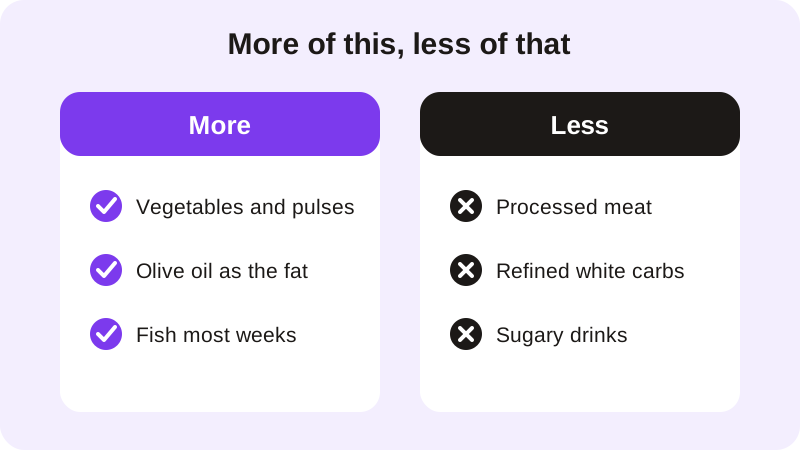
In practice, it's less a rulebook and more a set of defaults: what fills most of the plate, and what fills a smaller corner of it.
- Vegetables and salad at most meals, plus fruit.
- Pulses — beans, chickpeas, lentils — several times a week, as a main source of protein and fibre.
- Whole grains — wholegrain bread, oats, brown rice — in place of their refined versions.
- Fish, including oily fish, more often than meat.
- Olive oil as the main added fat, used in place of butter or hard margarine.
- Nuts and seeds in small daily amounts.
- Dairy, eggs and poultry in moderate amounts; red and processed meat kept occasional rather than daily.
Every one of those is an ordinary food. None of it needs importing or buying from a specialist shop. The PCOS grocery list covers most of these ingredients already, because it's built on the same template of protein, fibre and a little fat in every meal.
Why might it help with insulin resistance?
The chain that connects food to PCOS symptoms runs through insulin. Carbohydrate that digests quickly raises blood glucose quickly, the body answers with more insulin, and in PCOS that extra insulin can push the ovaries to make more androgens. The Mediterranean pattern slows that chain down in several ways at once, rather than through any single ingredient.
Pulses and whole grains carry more fibre than their refined equivalents, and fibre — alongside protein and a little fat — is one of the things that lowers a meal's glycaemic load. The low-GI foods list and the Mediterranean plate overlap almost completely: beans, oats and whole grains both rank low on Diabetes UK's GI scale and sit at the centre of this pattern. Olive oil and fish bring in unsaturated fat instead of the saturated fat that a diet built mostly around red and processed meat tends to carry, which is part of what the research on anti-inflammatory eating patterns looks at — covered in more depth in anti-inflammatory eating for PCOS. None of this is unique to the Mediterranean label. It's the same insulin-resistance mechanism described in insulin resistance and PCOS, arranged into a pattern of actual meals rather than a list of individual foods to chase.
It's also worth saying what this pattern is not. It is not a treatment for the long-term risk of type 2 diabetes that the 2023 international guideline flags for women with PCOS, and it does not replace medical care. That risk is a reason to talk to a clinician about screening, not a reason to treat diet as the whole answer.
What does a day on this pattern actually look like?
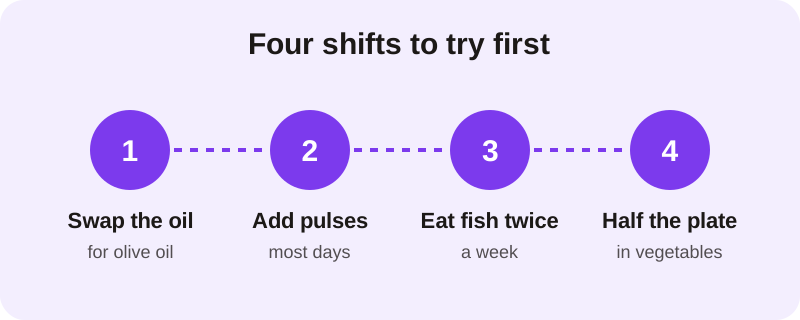
There's no single Mediterranean day, but a workable one keeps the same shape at every meal: a plant food doing most of the volume, a protein source, and olive oil somewhere in the mix.
- Breakfast — Greek yoghurt with oats and berries, or eggs with tomatoes on wholegrain toast. More ideas in the PCOS breakfast ideas page.
- Lunch — a big salad with chickpeas or tinned fish, olive oil and lemon, with a slice of wholegrain bread.
- Dinner — grilled fish or chicken with roasted vegetables and a side of lentils or brown rice. The PCOS dinner ideas page has more of these.
- Snacks — a small handful of nuts, fruit, or hummus with vegetable sticks.
In the app: the PCOS Pal app's food scoring and seven-day meal rotation lean the same direction as this pattern — more pulses, fish and vegetables, less relying on the same processed staples — without asking you to follow a named diet to use it.
Do you need to follow it exactly to get the benefit?
No. The evidence behind Mediterranean-style eating comes from studies of a pattern followed loosely over years, not perfect adherence to a checklist. Missing a day, eating out, or keeping foods you enjoy that aren't technically "Mediterranean" doesn't undo it.
If you already follow another pattern that works for you — a vegetarian PCOS diet, for instance — the same principles apply with different proteins. The point of the Mediterranean pattern is the shape it gives to a plate, not the geography of where the food is from. What to actually limit, and why bans tend to backfire, is covered in foods to limit with PCOS.
The Mediterranean label is useful shorthand, nothing more. What it points to — vegetables, pulses, fish, olive oil, whole grains, less processed meat and refined carbohydrate — is the same healthy eating the guideline already asks for, dressed in foods that happen to taste good together.
Frequently asked questions
Is the Mediterranean diet officially recommended for PCOS?
Not by name. The 2023 international guideline finds no evidence that any one diet composition beats another for PCOS and asks for healthy eating tailored to the person. The Mediterranean pattern is one well-studied way of meeting that advice, not an official PCOS prescription.
Will the Mediterranean diet help me lose weight with PCOS?
It isn't designed as a weight-loss plan, and no diet pattern promises that for PCOS. What it does is shift a plate toward fibre, protein and unsaturated fat, which can make meals more satisfying and steadier on blood sugar over time.
Can I follow this pattern if I'm vegetarian?
Yes. Swap fish for pulses, eggs, tofu or dairy as the protein, and keep the same shape — vegetables and whole grains doing most of the plate, olive oil as the fat. The principles don't depend on eating meat or fish at all.
Is red meat completely off-limits on this pattern?
No single food is banned. The Mediterranean pattern treats red and processed meat as occasional rather than daily, favouring fish, pulses and poultry most of the time. Limiting is different from forbidding, and one meal built around meat doesn't undo the overall pattern.
How quickly might I notice a difference?
This page can't promise a timeline, because the guideline doesn't give one and results vary by person. Insulin resistance and inflammation respond to patterns followed over months, not single meals, so it helps to judge consistency rather than week-to-week change.
This article is for education. It is not medical advice, diagnosis or treatment — talk to a clinician about your own care.
More in this series
- Anti-inflammatory eating for PCOS: what is real — Where "anti-inflammatory" and PCOS actually meet, which foods the evidence supports, which only marketing does, and how it overlaps with insulin advice.
- Foods to limit with PCOS, and why banning them backfires — The foods worth eating less often with PCOS, the evidence for each, and why "limit" beats "never" for a diet you can keep.
- Insulin resistance and PCOS, explained — What insulin resistance is, why it is so common in PCOS, how it is actually tested, and what food, movement, sleep and medication each do about it.
- Low-GI foods for PCOS: a practical list — What the glycaemic index does and does not tell you, which carbohydrates rank low, how protein and fat change the picture, and where GI stops helping.
- PCOS breakfast ideas that hold you until lunch — Why breakfast is where PCOS eating plans break, the protein-fibre-fat template that fixes it, ten breakfasts that use it, and what to do about coffee.
- PCOS diet: what to eat, and why it works — What the evidence says about eating with PCOS: insulin, the pattern that helps, the foods worth limiting, and why no rigid plan is required.
- PCOS is now PMOS: what changed and what didn't — PCOS has a new name, polyendocrine metabolic ovarian syndrome. Why it changed, and why your diagnosis and treatment stay the same.
- A 7-day PCOS meal plan you can actually keep — Seven days of ordinary meals built on the pattern the evidence supports, with a shopping list and swaps, and no food group cut out.