This article gives a protein-fibre-fat template plus ten concrete PCOS dinner ideas, explaining why the composition of the plate matters more than any single ingredient.
Good PCOS dinner ideas are built the same way every night: some protein, a fibre-rich vegetable or pulse, a slower carbohydrate, and a little fat. That's it — there's no special PCOS dinner, just ordinary meals arranged so they don't spike blood sugar and the insulin that follows it.
This sits under the PCOS diet guide, which explains why insulin is the lever that matters with PCOS. Dinner is just one more meal where that lever applies — no more, no less important than breakfast or lunch.
Why does the composition of dinner matter?
The 2023 international guideline finds no evidence that any one diet composition beats another for PCOS, and recommends eating tailored to the person rather than a fixed plan. What it does flag is insulin resistance as a factor in PCOS, and the guideline links that to a higher risk of impaired glucose tolerance and type 2 diabetes. Food that's mostly fast carbohydrate — white rice on its own, a big bowl of pasta with little else — asks the body for more insulin. Insulin, in turn, is tied to androgens, which is why the food-insulin link keeps coming up across PCOS advice.
None of this makes dinner special. It just means the same building blocks that work at breakfast and lunch work at dinner too: protein, fibre and a little fat slow the rise, whatever the meal.
What should a PCOS dinner plate actually look like?
Picture the plate in three sections rather than a recipe.
- Protein — chicken, fish, eggs, tofu, beans, lentils, or a lean cut of meat. This is the part most dinners already get right.
- Fibre — vegetables, salad, or a pulse-based side. The Eatwell Guide and NHS both point toward at least five portions of fruit and veg a day, and dinner is usually the easiest place to fit two or three of them in.
- A slower carbohydrate, in a reasonable portion — basmati rice rather than a large serving of white rice, a wholegrain wrap rather than white bread, new potatoes with the skin on rather than mash. The low-GI foods list has the fuller version of this swap.
Diabetes UK's glycaemic index scale is a useful shorthand here: a food scoring 55 or below is low GI, 56 to 69 is medium, and 70 or more is high. But GI on its own isn't the whole story — glycaemic load, which factors in portion size, matters more in practice. A small portion of a higher-GI food, eaten alongside protein and vegetables, behaves very differently from a large bowl of it eaten alone.
Ten dinner ideas that follow the template
Each of these can be made on a weeknight, and none needs a special ingredient.
- Grilled salmon, roasted broccoli and a small portion of new potatoes — protein, fibre and fat from the fish in one plate.
- Chicken and vegetable stir-fry with basmati rice — use plenty of vegetables and keep the rice portion moderate.
- Lentil and vegetable curry with a small serving of rice or a wholegrain chapatti — lentils bring protein and fibre together.
- Bean chilli with avocado and a side salad — beans do double duty as the protein and the fibre.
- Baked cod with roasted vegetables and quinoa — light, and reheats well as leftovers the next day.
- Turkey or lean beef bolognese over wholewheat pasta, with extra vegetables stirred through — the extra vegetables lower the glycaemic load of the plate.
- Stuffed peppers with mince, rice and cheese — a whole meal contained in its own vegetable.
- Grilled halloumi or tofu with a big Greek-style salad and a wholegrain pitta — a vegetarian option with protein and fat built in.
- Omelette with vegetables and a side of beans on wholegrain toast — a "breakfast for dinner" that still fits the template; the same idea shows up in breakfast ideas that hold you until lunch.
- Leftover soup with a boiled egg or a handful of nuts stirred in — most vegetable soups are fibre-heavy but light on protein, so adding some closes the gap.
Several of these appear inside the 7-day PCOS meal plan, arranged across a full week so dinner doesn't need to be decided from scratch every night.
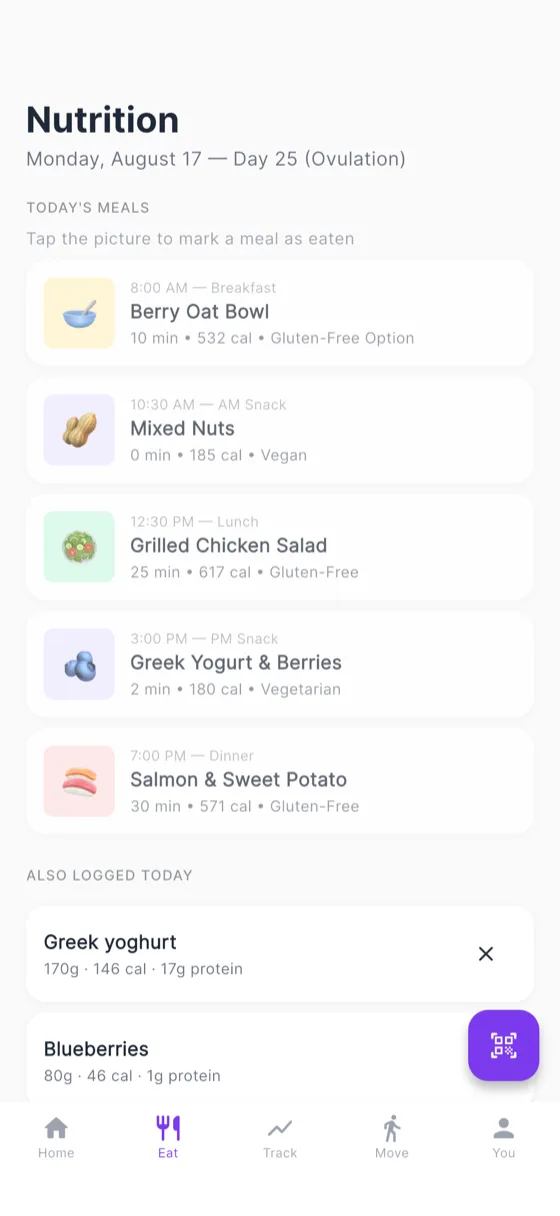
In the app: the PCOS Pal app scores meals by their protein and carbohydrate balance and, where known, their GI, and its seven-day meal rotation includes dinners built on this same template — useful on the nights when deciding what to cook feels like the hardest part.
What if dinner is the meal I always get wrong?
For a lot of people with PCOS, dinner is where the day's decisions catch up. If breakfast and lunch were rushed or skipped, dinner becomes the meal where hunger, tiredness and whatever's quickest all collide. That's a pattern worth noticing rather than a failure to fix in one evening.
A few practical adjustments help more than a strict recipe list:
- Batch-cook a base — a pot of lentils, a tray of roasted vegetables, cooked grains — so dinner is assembly, not a start-from-scratch project.
- Keep frozen vegetables and tinned beans on hand for the nights nothing is planned; they count just as much as fresh.
- If dinner keeps sliding later and later, or turns into grazing after a proper meal was skipped earlier, the pattern behind that is covered in PCOS late night eating.
- If sugar cravings show up specifically after dinner, that's often a blood sugar dip rather than a lack of willpower — more on that in PCOS sugar cravings.
Nothing here says a food is forbidden. Pizza, pasta, rice, bread — all of it fits, in a reasonable portion, alongside something with protein and fibre. The fuller reasoning on why banning foods tends to backfire is in foods to limit with PCOS, which is a very different list from foods to avoid entirely.
Does it matter what time I eat dinner?
The 2023 international guideline doesn't set a rule about meal timing, and there's no PCOS-specific dinner deadline. What matters more is regularity — eating at fairly consistent times across the day so you're not arriving at dinner ravenous, which tends to make portion sizes and food choices harder to manage. If you're curious whether skipping meals earlier in the day or narrowing your eating window helps with PCOS specifically, that's covered in PCOS intermittent fasting.
Insulin resistance and its practical effects on food choices are explained in more depth in insulin resistance and PCOS, if you want the fuller mechanism behind why this template keeps showing up across every meal of the day.
Dinner doesn't need to be reinvented every night. It needs the same three things most other meals need — something that fills you, something that slows things down, and a bit of fat — arranged in whatever order suits your evening.
Frequently asked questions
What is the best dinner for PCOS?
There isn't one best dinner — the 2023 international guideline finds no diet composition beats another for PCOS. What helps is a plate built around protein, fibre and a little fat, since that combination slows the rise in blood sugar and the insulin response that follows it.
Should I avoid carbs at dinner with PCOS?
No. Carbohydrate doesn't need to be avoided, just paired with protein, fibre and fat so it's absorbed more slowly. Choosing lower-GI carbohydrates like basmati rice or wholegrain bread over their high-GI equivalents is more useful than cutting carbs out entirely.
Is it bad to eat carbs late at night with PCOS?
Timing matters less than what's on the plate and how regularly you're eating through the day. If dinner is your first proper meal because earlier meals were skipped, that pattern is worth looking at — see the guide on late night eating for more.
Can I have takeaway food with PCOS?
Yes, occasionally, and no food is forbidden. If you can add a vegetable side, choose a less-processed carbohydrate, or ask for a protein-heavy option, the meal fits the same template as one you cook yourself.
This article is for education. It is not medical advice, diagnosis or treatment — talk to a clinician about your own care.
More in this series
- Anti-inflammatory eating for PCOS: what is real — Where "anti-inflammatory" and PCOS actually meet, which foods the evidence supports, which only marketing does, and how it overlaps with insulin advice.
- Foods to limit with PCOS, and why banning them backfires — The foods worth eating less often with PCOS, the evidence for each, and why "limit" beats "never" for a diet you can keep.
- Insulin resistance and PCOS, explained — What insulin resistance is, why it is so common in PCOS, how it is actually tested, and what food, movement, sleep and medication each do about it.
- Low-GI foods for PCOS: a practical list — What the glycaemic index does and does not tell you, which carbohydrates rank low, how protein and fat change the picture, and where GI stops helping.
- PCOS breakfast ideas that hold you until lunch — Why breakfast is where PCOS eating plans break, the protein-fibre-fat template that fixes it, ten breakfasts that use it, and what to do about coffee.
- PCOS diet: what to eat, and why it works — What the evidence says about eating with PCOS: insulin, the pattern that helps, the foods worth limiting, and why no rigid plan is required.
- PCOS is now PMOS: what changed and what didn't — PCOS has a new name, polyendocrine metabolic ovarian syndrome. Why it changed, and why your diagnosis and treatment stay the same.
- A 7-day PCOS meal plan you can actually keep — Seven days of ordinary meals built on the pattern the evidence supports, with a shopping list and swaps, and no food group cut out.