A practical guide to ordering at restaurants, takeaways, buffets and parties with PCOS, using the same protein-fibre-fat template recommended for eating at home.
PCOS eating out doesn't mean a special menu or an apology to the waiter. It means applying the same protein, fibre and a little fat template you already use at home to whatever's on the menu in front of you.
This sits alongside the PCOS diet guide, which explains why insulin is the lever with PCOS and why no single food is banned. Eating out is just that thinking applied somewhere without a kitchen scale.
Is eating out off-limits with PCOS?
No. The 2023 international guideline finds no evidence that one diet composition beats another for PCOS, and recommends eating tailored to the person, not a restrictive list of foods to avoid. There is nothing in the guideline, the NHS, or Diabetes UK that singles out restaurants, takeaways or parties as off-limits for the roughly 1 in 10 women of reproductive age who have PCOS.
What matters is the pattern across the week, not any single meal. One dinner out, even a rich one, does not undo days of steadier eating, and no single dinner can "fix" a week of chaotic eating either. The goal is the same one described in the guide to foods to limit with PCOS: limit, don't ban, and build most meals around protein and fibre.
What should you actually order?
The template is unchanged from home: protein, fibre and a little fat. Scan any menu for it rather than for a dish labelled "healthy," which usually just means low-calorie and can still be low on protein and fibre.
- Protein first. Grilled chicken, fish, steak, tofu, eggs, beans or lentils as the base of the dish, not an afterthought.
- Vegetables or salad as the side, not just the garnish. If the default side is fries, most places will swap it for salad or vegetables without a fuss.
- Carbohydrate, but not the whole plate. Bread, rice, pasta or potatoes are fine in a reasonable portion alongside protein and vegetables — the issue is a plate that's mostly starch with little else.
- Sauces and dressings on the side if you want to control how much goes on, especially sweet glazes and creamy dressings that can carry a lot of sugar or fat without announcing it.
This is the same logic behind the low-GI foods list: a meal built around protein and vegetables, with carbohydrate as one part rather than the whole plate, naturally lands lower on glycaemic load even without anyone checking a GI table at the table.
How do you handle buffets, tapas and shared plates?
These formats make portion size harder to track by sight, which is really the only thing that changes. The fix is the same template, applied before you start rather than after.
At a buffet, do one walk past the whole spread before putting anything on a plate, then build the plate protein-first: meat, fish, eggs or beans, then vegetables, then a modest amount of rice, bread or pasta. At tapas or shared-plate restaurants, try to make sure at least one or two dishes on the table are protein-led — grilled fish, a meat dish, a bean or chickpea dish — rather than letting the order default to bread, fried items and dips. Nobody needs to track this precisely; the aim is a table that has some protein and some vegetables in it, not an exact ratio.
What about takeaway and fast food?
Takeaway menus tend to be heavier on refined carbohydrate and fried food and lighter on vegetables, simply because those keep and travel well. The same template still applies, just with fewer good defaults built in.
- Choose grilled, baked or stir-fried over deep-fried where the menu allows it.
- Add a side salad or steamed vegetables if one is offered, even as an extra.
- Pick a protein-forward main — a curry with chicken or chickpeas, a fish dish, a bean burrito — over one that's mostly bread, rice or pastry.
- Skip the sugary drink that often comes with a meal deal; water, tea or black coffee does the same job without the extra sugar. The NHS marks over 22.5 g sugars per 100 g as high in sugar and 5 g or less as low, which is a useful rule of thumb if a drink's label is in front of you.
If takeaway or fast food is a regular feature of your week rather than an occasional thing, it's worth looking at what's realistic to cook instead — the 7-day PCOS meal plan and the PCOS grocery list are built around meals that are genuinely quick, not just theoretically healthy.
What about dessert and alcohol?
Neither is forbidden. Both are worth having with your eyes open rather than on autopilot.
Dessert eaten occasionally, as part of a meal that otherwise had protein and vegetables in it, is not undoing anything. The habit worth watching is dessert as a daily default rather than an occasional choice — that's less about any one pudding and more about the overall pattern of sugar across the week, which is covered in more depth in the piece on PCOS sugar cravings.
Alcohol is its own topic because it affects the body differently from food — it's processed by the liver ahead of other fuel sources, which changes how blood sugar behaves around it. If you drink when eating out, it's worth reading the dedicated page on PCOS and alcohol for the detail on how that interacts with insulin, rather than trying to reason it out at the table.
What's a practical way to approach a meal out?
Before you go, it can help to glance at the menu online and pick roughly what you'll order, rather than deciding when you're hungry and the bread basket has already arrived. If a meal out follows a day where you've had little else — skipped lunch to "save room" — you're more likely to eat past comfortable and to reach for the largest, sweetest option on the dessert menu. Eating something with protein earlier in the day, along the lines described in the PCOS breakfast ideas page, tends to make the evening meal out an easier decision rather than a rescue mission.
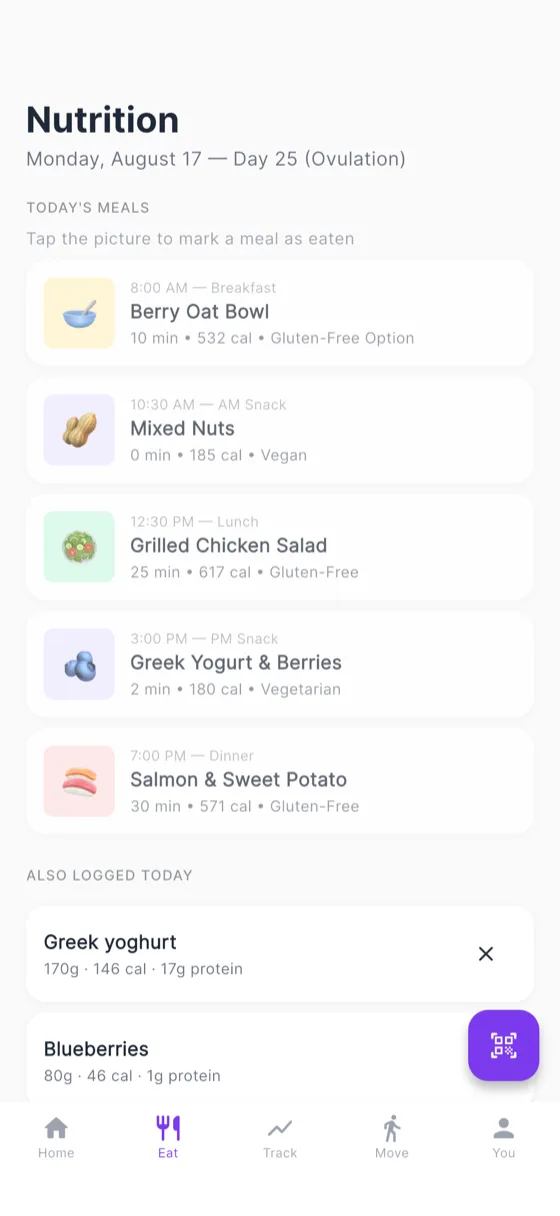
None of this requires tracking every ingredient at the table. The PCOS diet guide's template — protein, fibre and a little fat — holds up just as well at a restaurant table as it does at your own. When you're back home and restocking, the PCOS Pal app's barcode scanner and PCOS score can help you compare packaged options quickly, but at the table, the template is the whole tool.
Eating out is not a special category that needs its own rulebook. It's one more place the same ordinary habits apply.
Frequently asked questions
Do I need to ask for a special PCOS menu when eating out?
No. The 2023 international guideline finds no evidence that one diet composition beats another for PCOS, so there is no special menu to request. Look for a dish built around protein, vegetables and a slower carbohydrate, the same template you'd use at home.
Is it OK to eat out with PCOS regularly?
Yes. Eating out occasionally or even weekly is not a problem in itself. What matters more is the overall pattern across the week, not any single meal — one restaurant dinner does not undo a week of steadier eating.
What should I order at a fast-food or takeaway place with PCOS?
Favour grilled over fried, choose a side salad or vegetables over extra fries, and add protein where you can — chicken, beans, fish. Skip the sugary drink and have water, tea or black coffee instead.
Does alcohol undo a good meal out?
Alcohol affects blood sugar and is worth thinking about alongside food, not instead of it. For more detail on how it interacts with insulin, see the dedicated page on PCOS and alcohol linked from this guide.
What if the restaurant has no obviously 'healthy' option?
Most menus have something workable — meat, fish, eggs or tofu with vegetables, even if it's a side dish ordered as a main. Asking for dressing on the side or swapping fries for salad usually works without fuss.
This article is for education. It is not medical advice, diagnosis or treatment — talk to a clinician about your own care.
More in this series
- Anti-inflammatory eating for PCOS: what is real — Where "anti-inflammatory" and PCOS actually meet, which foods the evidence supports, which only marketing does, and how it overlaps with insulin advice.
- Foods to limit with PCOS, and why banning them backfires — The foods worth eating less often with PCOS, the evidence for each, and why "limit" beats "never" for a diet you can keep.
- Insulin resistance and PCOS, explained — What insulin resistance is, why it is so common in PCOS, how it is actually tested, and what food, movement, sleep and medication each do about it.
- Low-GI foods for PCOS: a practical list — What the glycaemic index does and does not tell you, which carbohydrates rank low, how protein and fat change the picture, and where GI stops helping.
- PCOS breakfast ideas that hold you until lunch — Why breakfast is where PCOS eating plans break, the protein-fibre-fat template that fixes it, ten breakfasts that use it, and what to do about coffee.
- PCOS diet: what to eat, and why it works — What the evidence says about eating with PCOS: insulin, the pattern that helps, the foods worth limiting, and why no rigid plan is required.
- PCOS is now PMOS: what changed and what didn't — PCOS has a new name, polyendocrine metabolic ovarian syndrome. Why it changed, and why your diagnosis and treatment stay the same.
- A 7-day PCOS meal plan you can actually keep — Seven days of ordinary meals built on the pattern the evidence supports, with a shopping list and swaps, and no food group cut out.